
Exploring Freedom
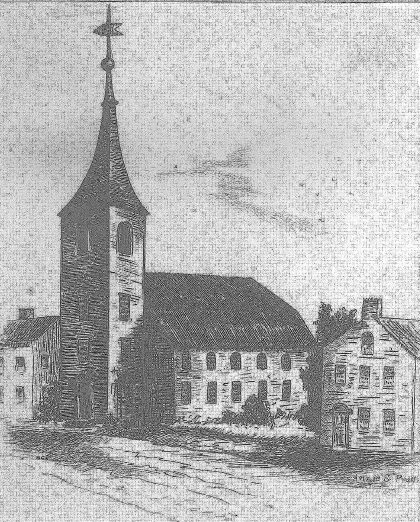 Valuing freedom has long been part of the DNA of First Church. While the Puritans who founded Boston in 1630 were famously intolerant of other religious beliefs, their desire to freely express their own religious vision brought them to these shores. That kernel of valuing freedom found fuller expression when First Church minister Charles Chauncey became a leading voice in the American Revolution. The British declared Second Church, which merged with First in 1970, to be a “nest of traitors.” As Boston prepares to celebrate the 250th anniversary of the Revolution, the relationship between religious values of freedom and their expression in society remain vitally linked for Unitarian Universalists.
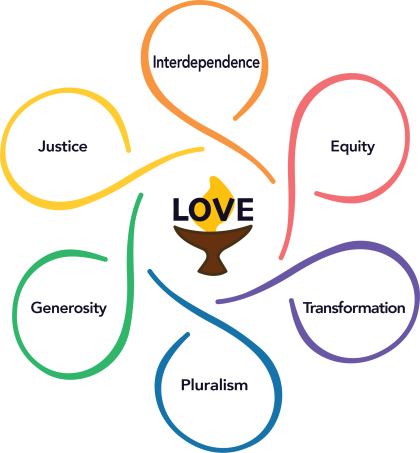
On May 5, Rev. May explores the connection of freedom and democracy in a sermon “Free to Vote.” The members of the congregation will exercise their own freedom to vote at the May 19 Annual Meeting where they will elect their leaders. Then, on May 22, Rev. May hosts a Learning Community discussion of a key vote at the June UUA General Assembly of Unitarian Universalist delegates on whether to change “Article 2” of the existing UUA bylaws—a bylaw that conveys the shared purposes and values of the member congregations.
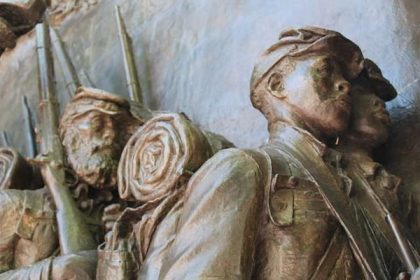 The theme of freedom will frame the other Sundays as well. After a year of sharing stories, the Rev. Hank Peirce will lead the full service on Mother’s Day, May 12, with a sermon “When Skateboards Shall be Free.” On May 19, Rev. May examines the relationship between language of freedom and liberation. In what ways are calls for freedom and those for liberation alike and different? On May 26, Rev. May revisits the origins of Memorial Day in the Civil War asking what freedoms we are willing to live—and die—for?
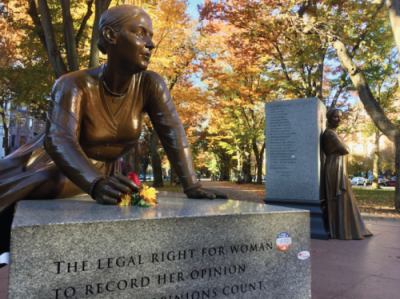 Commonwealth Mall monument to Lucy Stone (1818-1893). A Unitarian and anti-slavery speaker, Stone was a leading advocate for women’s suffrage, addressing the first legislative hearing in the United States on female suffrage one hundred fifty-one years ago on May 27, 1853.