
by Lindsay Donnelly-Bullington
 Welcome to 2025!
New Year’s has always been my favorite holiday. I love reading year-end best-of lists, observing rituals and superstitions about foods to eat and chores to avoid, and, of course, counting down to midnight to celebrate the promise of new beginnings.
This year, I’ve been noticing how January 1 feels, to me, like an odd start to a new year. I’m fascinated that we’ve chosen the dead of winter to start the new year in the northern hemisphere, where the Gregorian calendar originated.
But January 1 isn’t the only way to mark a new year, of course. Ours is a species that marks time with many different calendars.
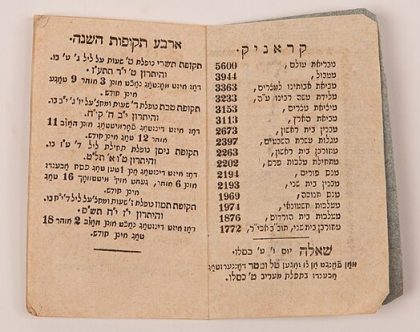
The Jewish calendar recognizes four New Years for civil, religious, animal, and arboreal purposes. The lunar Hijri calendar, which marks Islamic holidays for many Muslims, will celebrate a New Year in what the Gregorian calendar calls June for the next few years. The Chinese lunar New Year, which marks the arrival of spring, is celebrated from late January to February. Samhain on October 31 is sometimes called the Celtic or Witch’s New Year, coming at the end of the harvest and the coming of the winter.
Even our church year, in line with academic calendars, acts like something of a new year in the early fall.
 January 1 didn’t need to be the start of a New Year. It is not quite the Winter Solstice, but not so far past to notice the days warming here, usually. January 1 doesn’t seem, to me, like the time to go out and start a big, new adventure. So why start here, in the still-cold?
Here in Boston, many people welcome the New Year not by rushing into new adventures, but by taking time for introspection and reflection, setting intentions and resolutions to deepen our meaningful participation in our lives.
Every year, we make time and close down banks so that we can remember that we always get another chance for our own development. Our Universalist promise is that we will always deserve a loving attention to our perpetual transitions in this world, no matter how broken we may feel. We will not run out of chances to be the people our values call us to be.
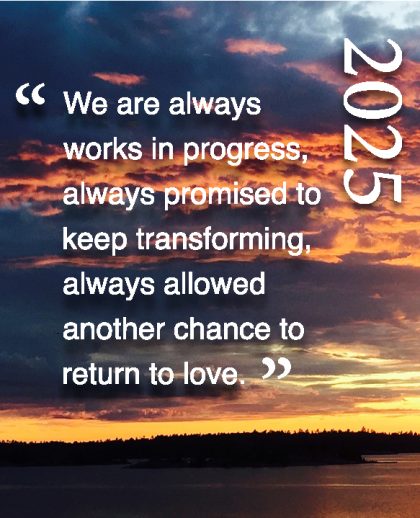
Our resolutions might not be so radical—maybe a daily practice, or just a vague idea of a way to be, promises to rest. Maybe you aren’t setting resolutions, noticing your changes in other ways. One way or another, we are always works in progress, always promised to keep transforming, always allowed another chance to return to love.