
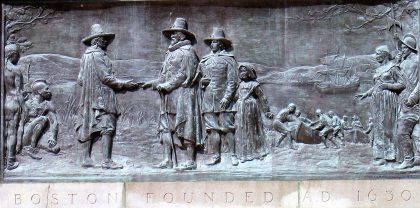
 As a nearly 400-year-old institution, First Church in Boston is deeply rooted in history, tradition, and place. However, the church that exists today is not the same in its ideas, actions, and culture as the church was at its founding in 1630. So also, each of us as individuals are rarely just the same as we were 5, 20, or 50 years ago. What is the relationship between our past and our present? Are we free to reinvent ourselves in any moment or do we remain rooted in the experiences, ideas, and cultures of our past?
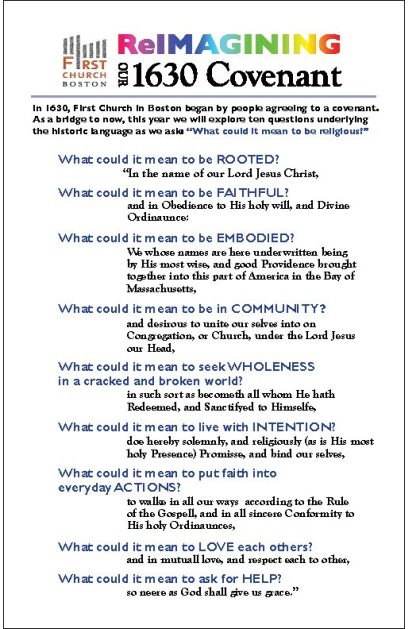 The founding seed of First Church in Boston is the 1630 Covenant, which was signed by those wishing to “unite ourselves into one Congregation, or Church.” However, much of the language of the historic document feels dated and disconnected to contemporary questions of religious and spiritual life. As a bridge to today, I invite you to join me in exploring the religious and spiritual questions beneath the 1630 Covenant over the coming year.
For example, the opening phrase, “In the name of our Lord Jesus Christ,” becomes the question, “What could it mean to be rooted?” For the English Puritans who first signed the covenant, locating themselves in relationship to Jesus identified them as Christian, rooting them in a religious tradition dating back more than 1500 years. This relationship to this tradition places them within a founding frame. What roots you? What lineages, traditions, and conversations frame your understanding of the world? Throughout September, we will explore these questions in Sunday Services as our monthly theme.
 Throughout the remainder of the year, we will continue to explore a different question drawn from the 1630 Covenant each month. [Download pdf of questions.] Through Sunday Services, small group discussions, and other special events, you are invited to reflect alone and with others about your own religious questions and search for answers. As Unitarian Universalists, we do not expect uniformity of answers. Rather, we intentionally leave space for freedom of belief even as we affirm our commitment to stay connected to one another in shared values.
Please reach out to me if you wish to learn more about this year’s 1630 Covenant Questions, Unitarian Universalism, or First Church Boston. I look forward to a year of interesting and meaningful conversations about what it could mean to be religious today.
in peace,